Welcome!Thank you for visiting! We look forward to seeing you.Welcome!Email is used by othersPlease enter user emailpassword reset link is sent to your email , the link will be expired in 30 mins
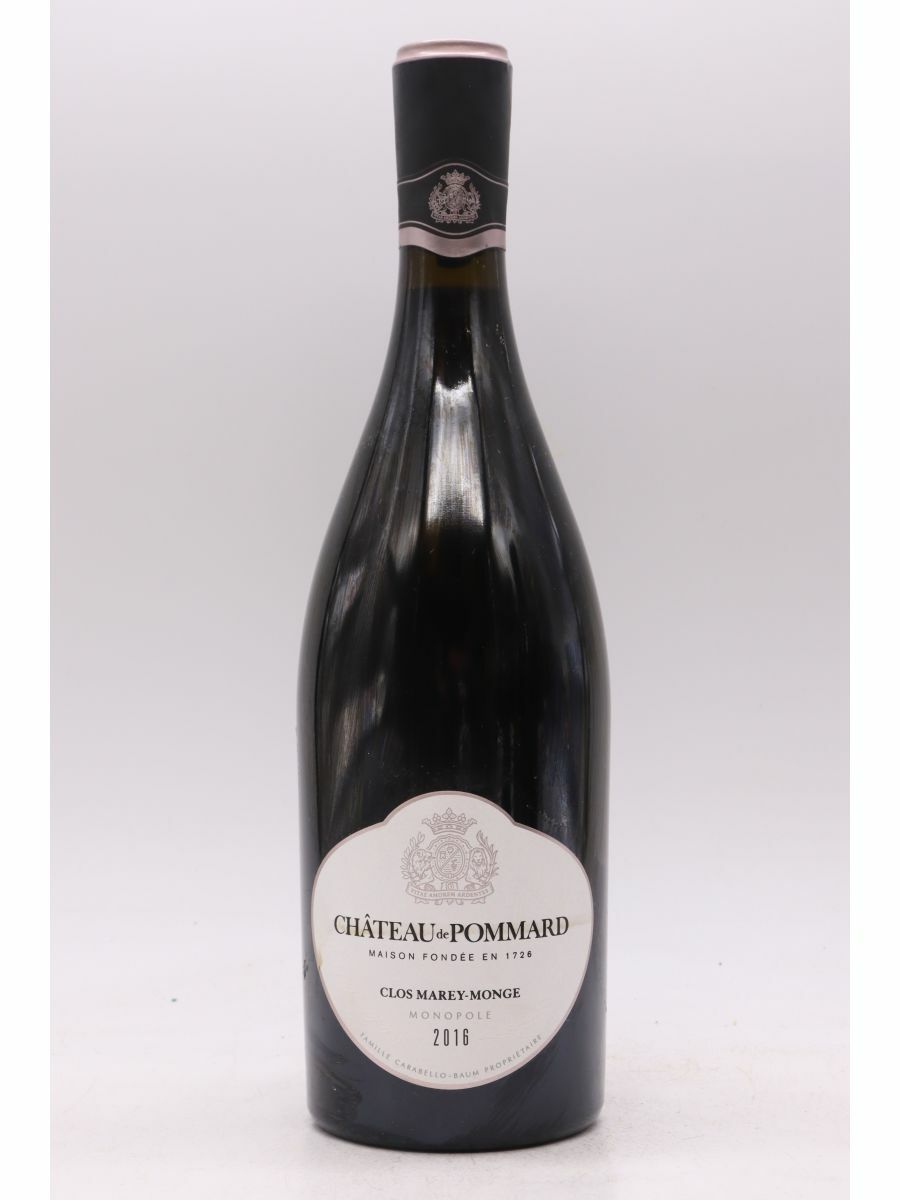
Chateau De Pommard, Clos Marey-monge Monopole, 2016
🏰 The 2016 vintage in Burgundy was generally considered excellent, producing wines with purity, freshness, and fine tannins. Château de Pommard's Clos Marey-Monge Monopole, a significant estate in the heart of Burgundy, likely reflects these characteristics. While specific detailed tasting notes for the 2016 Clos Marey-Monge Monopole are not readily available, wines from this monopole are typically known for their elegance, complexity, and ability to age. Expect a vibrant red Burgundy with a bouquet of red berries, earthy undertones, and subtle spice, leading to a palate that is well-structured with integrated tannins and a persistent finish. 【 Burgundy's historic monopole with elegant complexity 】
🥂 This wine is ideal for a classic French dinner, a special family gathering, or as a thoughtful gift for a Burgundy enthusiast. Its historical significance as a monopole and the quality of the 2016 vintage make it suitable for occasions that call for a wine with both pedigree and charm.
🍴 A classic red Burgundy like this would pair beautifully with traditional French cuisine. Think roasted duck breast with cherry sauce, coq au vin, beef bourguignon, or delicate game birds. Earthy mushroom dishes, such as a wild mushroom risotto, would also complement its profile. For cheese, opt for medium-aged, semi-hard cheeses like Comté or Gruyère.
BACKGROUND
Chateau de Pommard is a winery and wine merchant located in the Burgundy region. While best known for its namesake Pommard wine, the portfolio also includes a range of Pinot Noir and Pinot Noir from across the Côte d'Or. Chardonnay wine. This also includes some grand cru wines. In addition to its two unique chateau buildings, the winery has 20 hectares (50 acres) of walled vineyard Clos Marey-Monge. The estate dates back to its founding in 1726 by a nobleman of the court of Louis XV. The property was purchased by Maurice Giraud in 2003 and an improvement plan was implemented. In 2016 it was acquired by Silicon Valley businessman Michael Baum, whose team has begun converting the estate to biodynamic farming.